Monday, September 21, 2015

Fundermax wall cladding panels

By SUJITH.G.S

REAR VENTILATED EXTERNAL WALL CLADDING –

Rear-ventilated exterior wall claddings serve to improve the weather protection, the external appearance and the thermal insulation of buildings. The wide colour choice of MAX EXTERIOR and the various installation forms of suspended facades, offer the owner and the planner maximum design possibilities. MAX EXTERIOR can be installed on many conventional metal and wooden sub constructions from the various manufacturers.
MAX EXTERIOR is a high-quality building product, which is used as a large-format, flat panel specially for long-lasting balcony and facade claddings.MAX EXTERIOR panels are duromer high-pressure laminates


(HPL) conforming to EN 438 Type CGF with additional, extremely effective, weather protection. They are produced in lamination presses at great pressure and high temperature from lengths of natural fibre which have been impregnated with synthetic resin. As a result of the described production process - which has no negative effects on the environment - MAX EXTERIOR panels have the following excellent properties:
v High weather resistance

v  Optimal light-fastness

v  Scratchproof

v  Even better solvent resistance

v  Impact resistant

v  Resistant to adverse environmental influences (acid rain)

v  High mechanical strength (no risk of breaking)

v  Self-supporting

v  Bending resistant

v  Impact proof

v  Vandal proof

v  Decorative

v  Resistant to contamination by animals (urine resistant)

v  Easy to clean (e.g. spray graffiti)

v  Resistant to water and steam

v  Non-corroding and durable


ALL IMAGES COURTESY - FUNDERMAX


PREPARATION OF AN ARCHITECTURE PORTFOLIO

I have been receiving a lot of requests from students for details on HOW TO PREPARE A GOOD ARCHITECTURE PORTFOLIO. 

Taking this into consideration, I have compiled a detailed booklet on how to create a great portfolio, which will guide you through the detailed process, including identification of materials, ideal layouts, graphics and rendering styles, text placements, photographing your models....an exhaustive list which will guide you step by step.

You can now avail this great resource for creating your best portfolio, which is essential in this highly competitive age - either to get into good firms for internships, applying for your masters or for getting that coveted job.

Get full access to 'How to prepare an Architecture Portfolio' !!!

So go ahead and mail me at ar.sujithgs@gmail.com to order today! 

Monday, August 24, 2015

Architecture in Kerala - Fort Kochi Metamorphosis - A Photoessay

By SUJITH.G.S


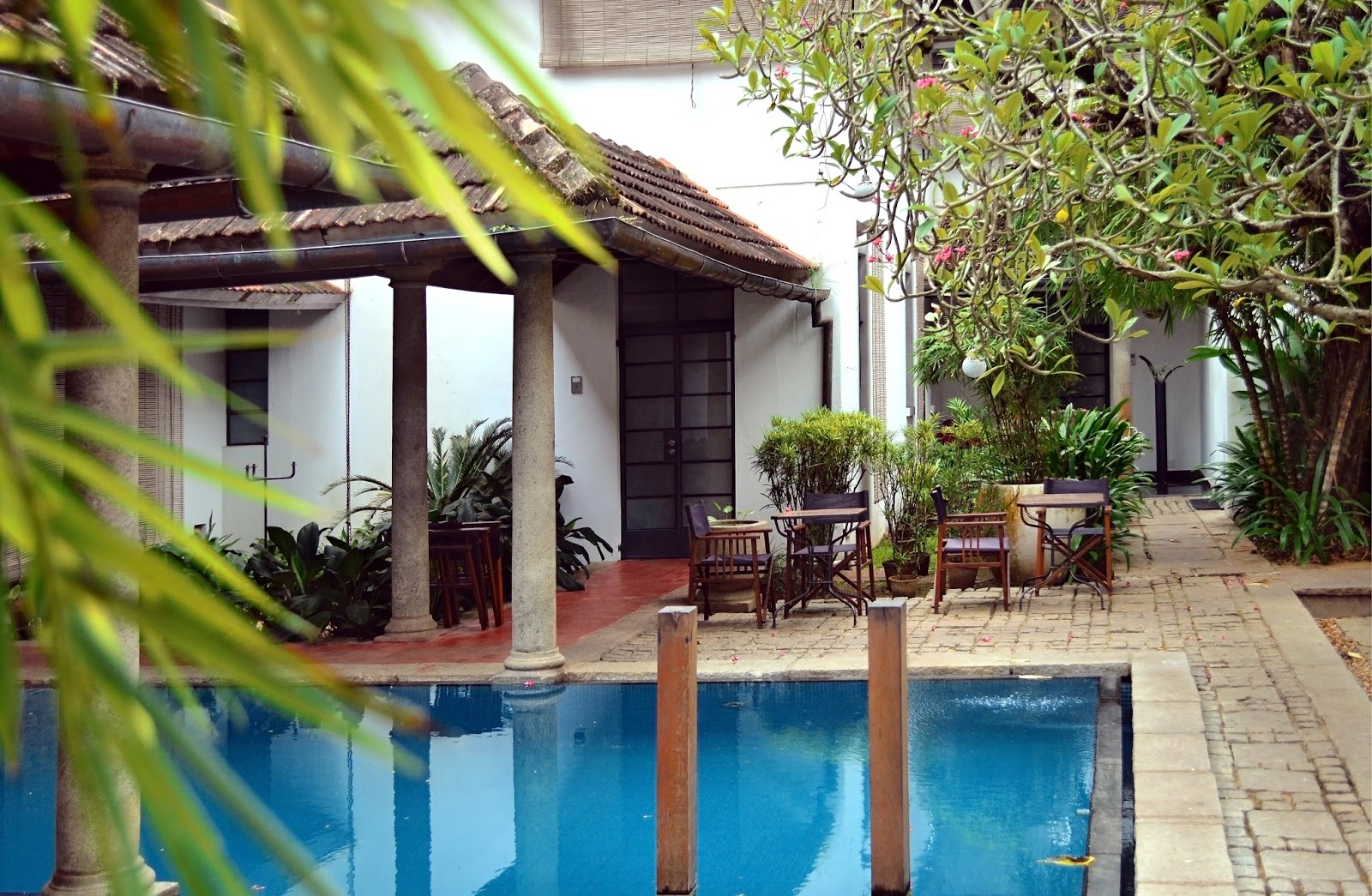
Fort Kochi has been evolving constantly, right from the glorious old days of the thriving spice trade to subsequent conquest by various colonial forces. Today, Fort Kochi is witnessing another kind of change - one, that is driven by the increasing tourism potential of the area. The old alleyways and godowns, where one can still feel the lingering essence of the spice trade are giving way to boutique restaurants and resorts. Most of these new spaces are housed in adaptively restored building of old, where modern architectural sensibilities and aesthetics are balanced with the history of the place, with the old building carefully preserved and reused. This photo-essay is an attempt to capture the present state of this evolution. 


PREPARATION OF AN ARCHITECTURE PORTFOLIO

I have been receiving a lot of requests from students for details on HOW TO PREPARE A GOOD ARCHITECTURE PORTFOLIO. 

Taking this into consideration, I have compiled a detailed booklet on how to create a great portfolio, which will guide you through the detailed process, including identification of materials, ideal layouts, graphics and rendering styles, text placements, photographing your models....an exhaustive list which will guide you step by step.

You can now avail this great resource for creating your best portfolio, which is essential in this highly competitive age - either to get into good firms for internships, applying for your masters or for getting that coveted job.

Get full access to 'How to prepare an Architecture Portfolio' !!!

So go ahead and mail me at ar.sujithgs@gmail.com to order today! 

Wednesday, August 5, 2015

ARCHITECTURAL TRAINING IN KERALA

BY SUJITH.G.S

Kerala has a very strong vernacular tradition in architecture which has guided the evolution of modern architectural practices in the state. This traditional influence is visible in a lot of the works that have emerged from the state over the years. However, there are a few emerging practices that are exploring newer directions, making a lot of exciting architecture.  Read on to find out the best architectural offices for training in Kerala.

Stapati - Calicut & Cochin

Stapati is one of the most professional and creative offices in Kerala. It is a large firm with branches in Calicut, Cochin, Bangalore and Chennai. Training in Stapati is a highly enriching experience where the students are given an opportunity to broaden their overall perspective, which is not restricted to architecture alone. The advantage for students is that they get to interact directly with Ar.Tony Joseph almost on a daily basis as he is highly passionate about imparting knowledge.


Stapati Calicut –


Stapati Cochin–


SpaceA.R.T, Calicut

Founded by architects Vinod Cyriac and Anita Choudhuri, the firm is a great place for internship - a balance of good architecture and fun.  Their characteristic style is of exposed brick structures with which they fashion beautiful and earthy spaces. Do check out their works at   before applying.

‘5 reasons to work at SpaceART’, in their own words –

·         We offer unlimited potential for growth
·         SpaceART recognizes individual contribution
·         All employees are empowered with responsibility and authority
·         SpaceART follow international standards and best practices
·         We offer career advancement opportunities across multiple sectors

You can upload your portfolios at - http://spaceart.org.in/?page_id=43

Contact –


JCJR Partnership– Architect Jayakrishnan & Chitra Nair, Trivandrum

Based in Trivandrum, JCJR partnership is one practice which has matured tremendously over the years and is presently producing some really good works. This husband and wife duo forms a great team and a student can definitely get inspired by the beautiful sketches that Jayakrishnan draws, to document the various places he travels to.

You can send your resume to - info@jcjrpartnership.com

Email: info@jcjrpartnership.com


Fahed Architects, Cochin

Architect Fahed Abdul Majeed is one of the most exciting young architect exploring new horizons in the built environment of Kerala. Very interesting details, usage of interesting materials and unique design solutions characterize his works.


BSA Architects, Manjeri

Architect Brijesh Shaijal’s unique practice is a great place to learn about the practical and innovative aspects of the profession

Email: mail@bsarchitect.com

De Earth, Calicut

Architects Vivek PP and Nishan’s works are very interesting for their exploration of various typologies and material qualities

Mobile: +91 9947493333


For a detailed eBook - 


Have you ever wished that you had all the details of the best architecture firms in India to for internships? Especially today, when the competition to get into those few vacancies in those good firms is really intense?

Ever wished that you had a single source which gave you the contact details of the best architecture firms in India, as well as brief information on their style and philosophy and a summary on why you should intern in a particular firm?

Well then, look no further!

‘TOP 100 ARCHITECTURE FIRMS FOR INTERNSHIP in INDIA’ is here! 

This single resource gives you the details of the Top 100 firms in the country, as well as their contact details. This list will save you hours of doing futile research on the net and also the contact details at your fingertips! You can choose the firms in your city of choice

So say goodbye to uncertainty and hours of hard work. This list will make your life so much easier and will help you get into that coveted internship position or even that first job that you are looking for!

So wait no more.

Order your copy of ‘TOP 100 ARCHITECTURE FIRMS FOR INTERNSHIP in INDIA’ today!


Mail me at ar.sujithgs@gmail.com for more details.


PREPARATION OF AN ARCHITECTURE PORTFOLIO

I have been receiving a lot of requests from students for details on HOW TO PREPARE A GOOD ARCHITECTURE PORTFOLIO. 

Taking this into consideration, I have compiled a detailed booklet on how to create a great portfolio, which will guide you through the detailed process, including identification of materials, ideal layouts, graphics and rendering styles, text placements, photographing your models....an exhaustive list which will guide you step by step.

You can now avail this great resource for creating your best portfolio, which is essential in this highly competitive age - either to get into good firms for internships, applying for your masters or for getting that coveted job.

Get full access to 'How to prepare an Architecture Portfolio' !!!

So go ahead and mail me at ar.sujithgs@gmail.com to order today! 


SUJITH.G.S is an architect and writer, with a passion for travelling, experiencing cultures, studying vernacular architecture as well as contemporary currents, which form the basis for his writing and blogging. You can contact him at ar.sujithgs@gmail.com

Thursday, July 23, 2015

Preparing an architectural portfolio – Review & Critique by Ar.Sujith.G.S


Presenting all aspiring young architects and student architects with a unique opportunity to get your portfolios reviewed by a practising architect!

 I cannot stress the importance of a good professional portfolio in today's highly competitive architectural field. Be it for getting internships in offices or for landing that first job, your portfolio is your one and only tool!

There are so many people out there that it is important to differentiate yourself, to get that cutting edge. And, from the innumerable portfolios that I receive, it is evident that often most students or young architects are not clear enough on how to prepare a good architectural portfolio. A lot of people think that splashing a lot of graphics and renderings will land you that job opportunity or that coveted internship position. However, a portfolio is much more than that.


PREPARATION OF AN ARCHITECTURE PORTFOLIO

I have been receiving a lot of requests from students for details on HOW TO PREPARE A GOOD ARCHITECTURE PORTFOLIO. 

Taking this into consideration, I have compiled a detailed booklet on how to create a great portfolio, which will guide you through the detailed process, including identification of materials, ideal layouts, graphics and rendering styles, text placements, photographing your models....an exhaustive list which will guide you step by step.

You can now avail this great resource for creating your best portfolio, which is essential in this highly competitive age - either to get into good firms for internships, applying for your masters or for getting that coveted job.

Get full access to 'How to prepare an Architecture Portfolio' !!!

So go ahead and mail me at ar.sujithgs@gmail.com to order today! 


Ar.Sujith.G.S Profile -

SUJITH.G.S is an Indian born architect who is passionate about design, writing, blogging and architectural photography. He began his professional journey as an architect in Larsen & Toubro where he worked for five years on a wide range of projects. Subsequently, he joined ‘Stapati’, where he has been working as a senior architect, handling some of the large-scale projects in the firm. He is a regular contributor to various architectural publications and has been a guest jury member for several architecture schools in India. He shares his perspectives on architecture and design through his blog, ‘Architecture Student’s Corner’.

A Sample page from the booklet 'Preparing an architectural portfolio - Dos and dont's'


WAF announces Festival Theme for 2015


50/50 – looking back, looking forward


This year the WAF seminar and keynote programme is inspired by Singapore's 50th anniversary as an independent country which it is celebrating in 2015. We are taking this opportunity to think globally about how architecture and urbanism have changed during that period, how predictions have been fulfilled or denied, and how we think conditions may change or stay the same over the 50 years to come.


Tuesday, July 14, 2015

The Bangalore workshop 2015

There is this very interesting workshop which is going to be held in Bangalore. Here is a brief synopsis as elucidated by Ar.Bijoy Ramachandran - 

'The Vimal Jain Foundation and the Indian Institute of Management Bangalore are organising a 5 day workshop from August 11th to 15th, 2015.

The workshop is being conducted by Richard Leplastrier and Peter Stutchbury, both accomplished teachers, practitioners and Australian Institute of Architects Gold Medal recipients. Both of them have also been involved in the Glenn Murcutt MasterClass (http://www.ozetecture.org/masterclass/glenn-murcutt-master-class/) since its inception in 2000. Dr. B.V. Doshi will join the Workshop on the last two days for the final reviews and public lectures.

For the 2015 workshop, participants will be invited to study the edges of the Indian Institute of Management Bangalore and suggest ways in which to negotiate the chaotic urban environment on the street with the serene quality of the campus. The aim is to attempt a bridge both physically (through architectural and programmatic ideas) and metaphorically between these two contrasting conditions. Though known internationally as a premier academic institution, IIMB is isolated from its immediate context and offers no opportunity for a dialogue. It is the hope that through the workshop one begins to find a way to have the Institute engage with the city and vice versa. This also offers a real opportunity to address the challenges posed by rapid urbanization and commercialism - how these edges are treated will hopefully offer clues for how ‘quality’ and public space could find its way back into our streetscapes.

The workshop is open to students and practitioners.
Application forms and portfolios are due on the 17th of July (email to vimaljainfoundation@gmail.com)

Richard is the genuine article - a sage of our time. If not the workshop you must try and come for the lectures on the 16th.'


Monday, July 13, 2015

Preparing an architecture portfolio - Dos and don't's - by Sujith.G.S


 As a practicing architect, I come across a relatively large number of portfolios for internship in our office, as well as those applying for job opportunities. Most of these portfolios are pretty average and poorly crafted, even though the quality of design is pretty good. That either means that a) students do not pay enough attention, or b) students do not have a good idea of how to prepare a good portfolio. It is in this context that I thought I’d share some points to help students with their architecture portfolio preparation

A portfolio should reflect the architectural and aesthetic sensibilities of the student. It is a great way of communicating what you believe in, in highlighting your strengths and skills. That being said, an architectural portfolio is a professional document and one must make every effort to keep it as professional as possible, while highlighting your creative side.

Keep your portfolio neat and simple.  I can't stress that enough. Most of the designers appreciate portfolios that are clean, which can clearly communicate your design and creative works. You can always take inspiration from the simple clear design aesthetics of Apple. It was Steve Job's single minded pursuit for perfection which has thrown out all the unnecessary frills and helped evolved some of the most beautiful gadgets.  An architectural portfolio should also be similar. The idea is not to create an overloaded graphical presentation, but one which would highlight your design work and would communicate it in a clear legible manner.

Today there is a plethora of presentation and graphical softwares which can create awe inspiring images. But keep in mind that ultimately it is not the fancy graphics that will have to be the highlight of your architecture portfolio. But always keep in mind that it is always a design portfolio and that design must take precedent.

Please avoid unnecessary personal details and 'cool' personal photographs. If you must add your picture, please keep it relatively straightforward.

Most of the portfolios that I get include ‘photography’ as one of the skill sets. Today, with the plethora of good quality cameras and editing softwares, almost everyone is an amateur or semi-professional photographer. Thus unless you really are passionate about photography and have got some good photographs, it is always best to avoid adding random clicks as your photography work.

As an architect, one is expected to be able to communicate your ideas through sketches and drawings. It is a skill that most of the architects look for in students. That being said, not everyone can effectively communicate through good sketches. If sketching is not your cup of tea, I would advise that you do not forcefully include poor sketches just for the sake of adding it, but highlight other skill sets like graphic abilities. Always try to include as much hand drawn content as possible in your portfolio and while doing so, ensures that the sketches are scanned properly in good resolution (300 dpi always) and that the lines are clear.

Pay attention to your fonts and text. Today, there are plenty of fonts which can be used to create eye catching content in your portfolio. Use fonts judiciously to create an order.

Be extremely careful in all the content that you include. All the text must be checked for grammatical mistakes. Always, and I mean always, use spell-check on all your content in your portfolio. It is not at all acceptable to have basic spelling mistakes in your portfolio. It would mean that you are not professional enough in your work.

Writing quality content is again another challenge for any architectural student. Add only that text which you feel is absolutely essential. Avoid giving too elaborate write-ups explaining your designs and ideas. Most of the architects are not going to ever read through the whole text. So, keep your writing to the minimum and let your drawings do the talking. And always ensure that only relevant and grammatically correct content is included. If on the other hand you are good at writing, let it come through in minimal sentences which would capture the essence of your design.

Finally, don't be afraid of white spaces! You do not need to crowd your whole layout, cramming tons of stuff in it. Make white spaces work in your favour by their judicious use. However, this has to be handled carefully, as too much white can lead to a blank look. So use your aesthetic sense and decide the optimum amount of content vs white space.

I've created a detailed booklet on how to go about creating your Architecture Portfolio, covering all the other areas to be given thought to.. There is detailed coverage on each aspect of your portfolio, with a lot of tips to help you create that perfect portfolio.

Order your e-copy of How to prepare an Archietcture Portfolio today at just Rs.250!!! And what's best, it will cost you  than  good meal in a restaurant. So go ahead, don't let this opportunity pass by

Write to ar.sujithgs@gmail.com NOW!


A few examples of interesting portfolios -

http://issuu.com/cheli825/docs/portfolio_lopez_a1


This is a  good example of a well crafted portfolio. Most of the points mentioned above are reflected in this one


http://issuu.com/b.a.maranda/docs/portfoli


FOR A DETAILED BOOKLET ON 'HOW TO PREPARE YOUR ARCHITECTURE PORTFOLIO', EMAIL ME AT ar.sujithgs@gmail.com. 

 Don't miss this wonderful opportunity!


A sample page from the booklet!


Tuesday, June 23, 2015

Charles Correa, rest in peace!

If you can keep your head when all about you 
Are losing theirs and blaming it on you, 
If you can trust yourself when all men doubt you,
But make allowance for their doubting too; 
If you can wait and not be tired by waiting,
Or being lied about, don’t deal in lies,
Or being hated, don’t give way to hating,
And yet don’t look too good, nor talk too wise:

If you can dream—and not make dreams your master;
If you can think—and not make thoughts your aim;
If you can meet with Triumph and Disaster
And treat those two impostors just the same;
If you can bear to hear the truth you’ve spoken
Twisted by knaves to make a trap for fools,
Or watch the things you gave your life to, broken,
And stoop and build ’em up with worn-out tools:

If you can make one heap of all your winnings
And risk it on one turn of pitch-and-toss,
And lose, and start again at your beginnings
And never breathe a word about your loss;
If you can force your heart and nerve and sinew
To serve your turn long after they are gone,
And so hold on when there is nothing in you
Except the Will which says to them: ‘Hold on!’

If you can talk with crowds and keep your virtue,
Or walk with Kings—nor lose the common touch,
If neither foes nor loving friends can hurt you,
If all men count with you, but none too much;
If you can fill the unforgiving minute
With sixty seconds’ worth of distance run,
Yours is the Earth and everything that’s in it,
And—which is more—you’ll be a Man, my son!
- 'If' by Rudyard Kipling


Charles Mark Correa, one of India's greatest sons has passed away. Correa was one of the master's of modern post-independence Indian architecture, creating works which exuded a very unique Indian aesthetic, which were unabashedly contemporary, but which were always rooted in their context. 'Critical Regionalism' can best be used to describe his works. Correa has inspired a few generations of Indian architects through his body of work. He was one of the thought leaders who defined the direction of architecture after the turbulent years of the Independence struggle, deriving a uniquely Indian concept of space. He was someone who did away with heavy theoretical and conceptual postulating but someone who explained his designs in simple terms as ideas which ordinary people could directly relate with. His body of work stands testament to the timelessness inherent in his designs. It is indeed a deep loss for our architectural fraternity. 

Rest in peace sir. Your works continue to inspire us and will continue to do so for countless generation of young architects!

Learn more about Charles Correa, India's greatest architect here