Showing posts with label ARTSCAPE. Show all posts

Wednesday, March 16, 2016

The architecture of the amazing new International terminal, T2, at Mumbai by SUJITH.G.S

Recently I had the good fortune of travelling to Mumbai for the jury for the IIA National Awards for Excellence in Architecture 2015. I had always wanted to visit the new Internatinal Terminal designed by SOM and this was a lucky opportunity to do just that. 

Airport architecture in India is generally characterised by a pseudo-contemporary approach to design, an attempt to create an international language,one which would supposedly portray the global ambitions of the Indian cities. Though the inherent idea behind this approach is noteworthy, the end results leave much to be desired. An airport, as with any other space should respond to the local context even while espousing a contemporary vocabulary. This however, has not been achieved with most of the new airport designs, including the larger airports in the metros. The designs even though nice, are not something one would classify as jaw-dropping, and the response to the local context is totally missing. It is in this background that the design for the new airport in Mumbai gains significance.

The airport, at first glance is simply amazing. The thing that really stands out is the wonderful fractal inspired columns which seamlessly merge into the ceiling as a pattern of coffer slabs. The wonderful concept is detailed out well to create a unique pattern on the ceiling, which combined with the interesting lighting detail, creates a truly amazing space. Long slender spots radiate out from the column capital, creating a dynamic ceiling design. Thus the columns and ceiling create an enclosure which defines the entire space. There are strong references to the traditional stone work so common in Indian architecture, which provides conceptual framework rooting the design in the larger context.


The interiors are well detailed out, with attention paid to even minute things. This attention to detail creates a sense of exclusivity and luxury. The design is unapolegetically contemporary in essence, yet provides references to our past through patterns, materials and colours.

In spite of such a wonderful design, the main attraction for me was the amazing art collection which was featured on a long linear wall on the way to the boarding gates. There is an extensive display of art from across the country, which was painstakingly curated by Rajeev Sethi, right from traditional woodwork which displays the intricacy and refinement of our crafts to contemporary installations, all referencing the richness of our art and craft traditions. The linear wall rises to a height of over 3 levels, creating a scale for the display of such grandiose art works. The passengers can also have a much intimate experience of the smaller sculptures which dot each level. There is no better way than a well curated display of art, to portray and celebrate the vibrancy and richness of our culture and that too in such a terrific setting. Hats off the the GVK group for having the vision and supporting such a complex, diverse and expensive collection.


Ar.Sujith.G.S at the T2 Terminal in Mumbai, in front of the amazing art collection


SUJITH.G.S is an architect and writer, with a passion for travelling, experiencing cultures, studying vernacular architecture as well as contemporary currents, which form the basis for his writing and blogging. You can contact him at ar.sujithgs@gmail.com

Monday, August 24, 2015

Architecture in Kerala - Fort Kochi Metamorphosis - A Photoessay

By SUJITH.G.S


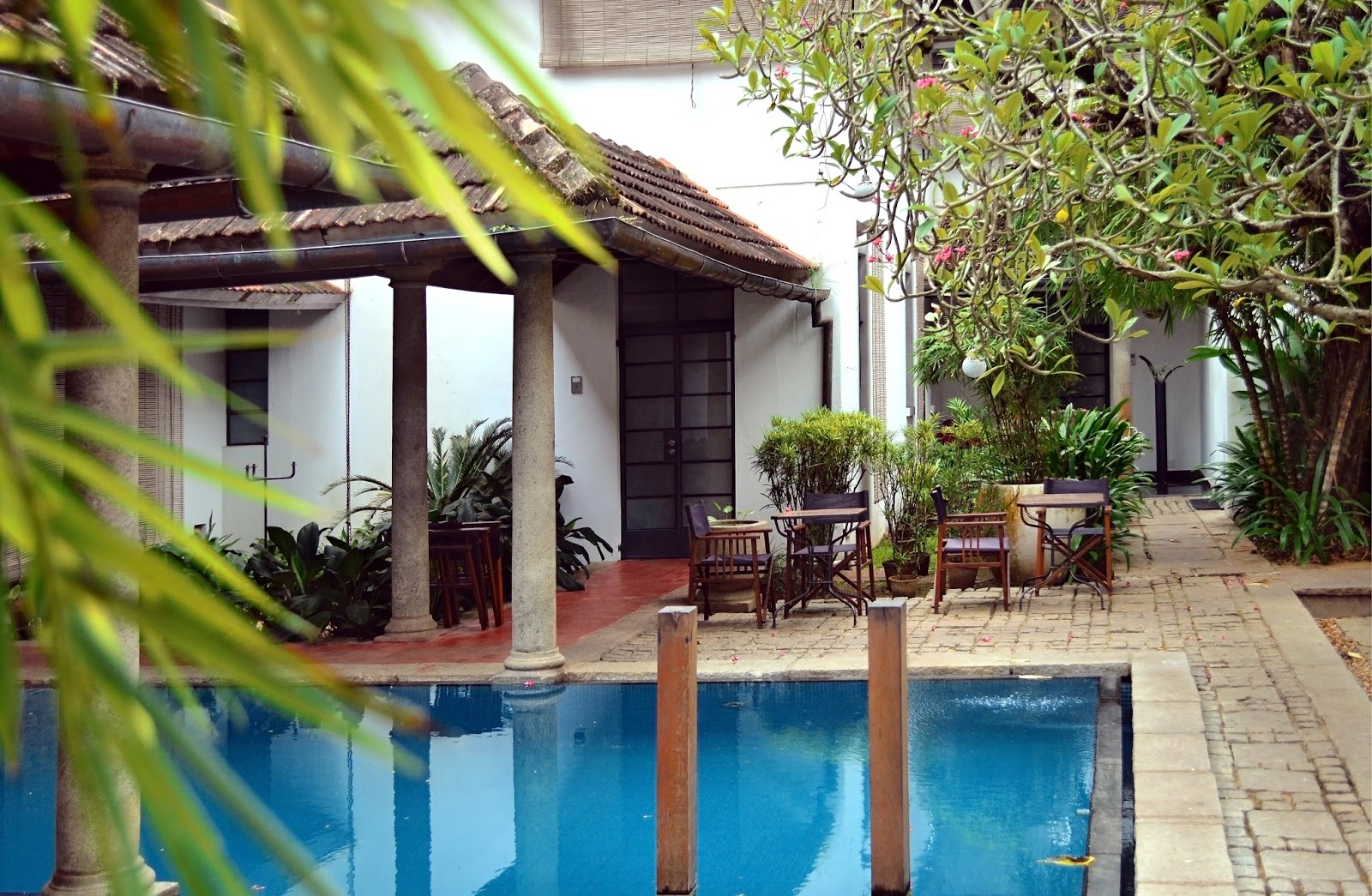
Fort Kochi has been evolving constantly, right from the glorious old days of the thriving spice trade to subsequent conquest by various colonial forces. Today, Fort Kochi is witnessing another kind of change - one, that is driven by the increasing tourism potential of the area. The old alleyways and godowns, where one can still feel the lingering essence of the spice trade are giving way to boutique restaurants and resorts. Most of these new spaces are housed in adaptively restored building of old, where modern architectural sensibilities and aesthetics are balanced with the history of the place, with the old building carefully preserved and reused. This photo-essay is an attempt to capture the present state of this evolution. 


PREPARATION OF AN ARCHITECTURE PORTFOLIO

I have been receiving a lot of requests from students for details on HOW TO PREPARE A GOOD ARCHITECTURE PORTFOLIO. 

Taking this into consideration, I have compiled a detailed booklet on how to create a great portfolio, which will guide you through the detailed process, including identification of materials, ideal layouts, graphics and rendering styles, text placements, photographing your models....an exhaustive list which will guide you step by step.

You can now avail this great resource for creating your best portfolio, which is essential in this highly competitive age - either to get into good firms for internships, applying for your masters or for getting that coveted job.

Get full access to 'How to prepare an Architecture Portfolio' !!!

So go ahead and mail me at ar.sujithgs@gmail.com to order today! 

Saturday, June 7, 2014

Forum Mall, Mangalore


Went to the newly opened Forum Mall in Mangalore recently. Saw this interesting installation in the central atrium made up of hanging colourful umbrellas. Found it pretty interesting.

Sunday, June 10, 2012

'Time Tides' - K.S.Radhakrishnan's sculpture in Mananchira square


Went to Mananchira square to see ’Time Tides’, the 25-foot tall sculptor installed by noted sculptor K.S.Radhakrishnan as part of the ‘Shilpa Nagaram’ project. The centre of attraction in the composition is’ Musui’, sculptor K.S.Radhakrishnan’s favourite muse. It was my first time inside Mananchira and I must admit that it is a very interesting urban space, a literal green lung of the city. Went straight to the statue placed in the middle of the green open lawn. There were a few people loitering around the installation, more curious and puzzled than appreciative. 2 huge granite rectangular blocks of stones kept vertically act as a reference for Musui to acrobatically suspend himself in air. Four additional massive boulders are strewn around thse 2 vertical elements. It is almost a very random composition. The blocks were placed in position recently and the fresh remains of earth are visible on the surfaces of the granite.

There is an apparent weightlessness about Musui, a joy in being unhindered, free, yet delicately poised. This lightlessness is contrasted heavily with the massive granite boulders and their earthiness. The boulders are scarred with straight deep cuts made during their excavation. Another contrast, a comparison of Musui’s total freedom unaffected by the trials and troubles of mundane life, refusing to bow down and be tied, remaining free as the air.

One apparent anamoly is that the sculpture and Musui takes hold of you only when you are really close to it, almost right beneath it. Here, the scale becomes massive and Musui’s delicate balancing act and apparent weightlessness even more pronounced and surreal. When one is far away, the black form of Musui is almost unfathomable among the dark green foliage behind. Maybe it will be different when the sun is out and it is not cloudy like when I visited it.

I was standing back and observing how ordinary people reacted to such public art and installations. For most people, it was something curious, something maybe even puzzling, something which they try to find meaning and most often being too lazy to use their grey cells they wander off ignoring it. Some people try hard to analyse it and find meaning, seeing it from different angles, searching and interpreting. Here the installation serves its real purpose, making people think and contemplate. However, for most people, it is just a backdrop, something that merely exists.

This is where the real importance of urban public art lies. It is right around us, in common places and in our day to day life. One doesn’t need to go into an art gallery to experience it. Such art should make one think, make one find and appreciate beauty, to contemplate and overall enrich our lives. Sadly, we have been neglecting public art in our urban spaces to the point that new art is almost non-existent. There is no effort to realise its immense potential and to revive it in out urbanscapes. It is why such initiatives like the Shilpa Nagaram project are extremely commendable and relevant. 12 sculptures made by noted sculptors from across the country will be installed at key locations in Calicut city as part of this project, and hopefully will lead to an increased focus and appreciation of arts.

Friday, April 13, 2012

KOCHI-MUZIRIS BIENNALE


'The Kochi-Muziris Biennale is an international exhibition of contemporary art being held in Kochi, Kerala. The exhibition will be set in spaces across Kochi, Muziris and surrounding islands. There will be shows in existing galleries and halls, and site-specific installations in public spaces, heritage buildings and disused structures. Indian and international artists will exhibit artworks across a variety of mediums including film, installation, painting, sculpture, new media and performance art. Through the celebration of contemporary art from around the world, the Kochi-Muziris Biennale seeks to invoke the historic cosmopolitan legacy of the modern metropolis of Kochi and its mythical predecdessor, the ancient port of Muziris. Alongside the exhibition the Biennale will offer a rich programme of talks, seminars, screenings, music, workshops and educational activities for school children and students of all ages.'

The Kochi-Muziris Biennale is proposed to be held in the port city of Kochi from 12.12.12 for a period of three months and tries to catapult Kochi and India into exciting world of contemporary art festivals held across various countries. It is all the more relevant as presently there is no art festival in India which can be proudly compared on an international scale. True, presently Kochi does not have the necessary infrastructure or systems in place for the conduct of such an event but it is an ambitious start to create a culture, to start a lasting dialogue. For this, the curators of the event Riyas Komu & Bose Krishnamachari must be commented and given the required support. As they say, this event will help in bringing about a lot of facilities for visual & other arts in Kochi, create a culture for appreciation & critical evaluation of art and architecture & hopefully make it more accessible to the common man.

The Kochi-Muziris Biennale will be the largest contemporary art event in the country and will feature a variety of mediums from painting, sculpture, public installations, films, performance arts etc. by over 80 artists from India and abroad. For this purpose, exhibition halls, public spaces, heritage structures etc are proposed to be included as venues. ‘The exhibition will be an explosion of mindscapes set in spaces interspersed throughout Kochi, Muziris and surrounding islands. The Biennale will offer a citywide experience taking visitors from galleries in the heart of Kerala’s commercial capital to halls and homes in ancient Fort Kochi, to site specific installations in public spaces, heritage sites and hidden disused structures...’ states the brochure. From an architect’s point of view, one hopes that these initiatives will help in creating a stronger interaction between art, the public spaces and the common man. Ideas on integrating art into our public spaces and our lives need to be clarified and developed, importance of re-engaging with the public realm and the urban sphere needs to be highlighted and for this the Biennale hopefully will serve as an ideal platform.
For more information, visit http://www.kochimuzirisbiennale.org/

Have you ever wished that you had all the details of the best architecture firms in India to for internships? Especially today, when the competition to get into those few vacancies in those good firms is really intense?

Ever wished that you had a single source which gave you the contact details of the best architecture firms in India, as well as brief information on their style and philosophy and a summary on why you should intern in a particular firm?

Well then, look no further!

‘TOP 100 ARCHITECTURE FIRMS FOR INTERNSHIP in INDIA’ is here! 

This single resource gives you the details of the Top 100 firms in the country, as well as their contact details. This list will save you hours of doing futile research on the net and also the contact details at your fingertips! You can choose the firms in your city of choice

So say goodbye to uncertainty and hours of hard work. This list will make your life so much easier and will help you get into that coveted internship position or even that first job that you are looking for!

So wait no more.

Order your copy of ‘TOP 100 ARCHITECTURE FIRMS FOR INTERNSHIP in INDIA’.


Mail me at ar.sujithgs@gmail.com for more details.

Sunday, April 8, 2012

JAYA JAITLEY - CRAFTSLADY OF INDIA

Today, there is an interesting situation confronting the handicrafts scenario in the country. There is an effort to take the beautifully and painstakingly created crafts out into the midst of the people, to make them more accessible as it were. Yet, the ironic part is that these handicraft traditions which were part and parcel of our culture and society have moved from an integral part of our life to a state of neglect and now presently to a perceived inaccessible elitist pedestal. Today, the general perception is that these natural materials are only for the well to do sections of our society while the common man finds only the synthetic materials cheaper and affordable. The painstakingly handmade artefacts of our karigars are no match for the cheap Chinese products and machine made competition.
One lady who has done enormous service to the handicrafts scenario in India is Jaya Jaitley. From setting up the immensely popular Dilli Haat in our national capital to highlighting the issues facing our traditional artisans, she has done it all in a career spanning over four decades. The Dilli Haat, which was her brainchild, was set up in 1994 and provides a platform to bring the traditional crafts to a mainstream audience. The meteoritic popularity of the concept can be gauged from the tremendous public interest it receives even today with youngsters, families, tourists and foreigners thronging the place and patronising the various products on display. This not only gives the artisans a good boost monetarily, but also serves a more key role in dissemination of knowledge on our traditional heritage which needs to be preserved and encouraged.


Jaya, originally hailing from Kerala developed her love for the aesthetic tradition when she was living with her father who was posted in various foreign locations as part of his job in the Foreign Service. Thus, Japan, Belgium and Burma, all played a part in forming her aesthetic sense. Later, it was the 12 years she lived in Kashmir where she worked with local craftspersons that really laid the foundation to her subsequent passion. Since then she has constantly worked along with the local artisans trying innovations and also helping to better market the products. She has travelled extensively all over the country, often living among the craftsmen so much that they’ve now become her extended family.
Seeing the tremendous success of the Dilli Haat, other Haats have come up in various parts, but they are yet to replicate the tremendous engagement which Dilli Haat has managed to achieve and sustain. She rightly points out that these crafts are painstakingly made by hand and hence are to be valued more than the cheaper machine made products. But more importantly, they are a direct part of our culture and heritage, often the skill being passed from one generation to another. To maintain this chain of succession, it is important that the artisans are rewarded fairly so that they don’t feel the need to discontinue their profession and go in search of other greener pastures. Thus, it is imperative even from the government’s point of view to remove bottlenecks like access to raw materials and ensure fair taxation practices. This when added with a robust marketing platform will go a long way in tiding over other constraints and creating true empowerment, feels Jaya.


Apart from the various books she has authored on handicrafts, her present passion is the Dastakari Haat which she has helped set up, which creates a whole range of traditional products with contemporary design sensibilities. The store which runs out of the upmarket Khan market in Delhi has ensured that the craftsmen get better visibility and a great platform to market their products. All these initiatives ensure that Jaya is still going strong in the process of upliftment and empowering of our great handicraft tradition and its proponents.